
“Algorithmic Technology and the Human Future: Issues in Democracy, Education, and Valuation”
A tribute to the life and work of
Larry A. Hickman
Featuring scholars and friends of Larry sharing philosophical celebrations that engage aspects of Dr. Hickman’s wide-ranging interests.
Celebrated online March 23-26, 2022
View Video Archives
March 23, 2022: Evelyn Brister at San Marcos Public Library
March 25, 2022: Day 1 Session Videos
March 26, 2022: Day 2 Session Videos
Below you will find details about the presentations and their presenters.
For published papers, please see: Contemporary Pragmatism Volume 20 (2023): Issue 1-2 (Apr 2023): Special Issue: In honor of Larry Hickman, edited by John R. Shook.

Hickman, Buddhism, and Algorithmic Technology
Jim Garrison, Virginia Tech
This paper provides further reflections on my dialogue with Larry Hickman, director emeritus of the Center for Dewey Studies, and Daisaku Ikeda, president of the lay Buddhist organization Soka Gakkai International (SGI). The most surprising outcome of this dialogue is how similar Deweyan pragmatism is to many forms of Mahayana Buddhism including Nichiren Buddhism the source of SGI. I have explored some of these similarities elsewhere. Here I survey additional similarities in terms of Hickman’s philosophy of technology by emphasizing value creation and criticism. (Soka Gakkai means value creating society.) I explore Peter D. Herschock’s, Buddhism and Intelligent Technology relying on Hickman to rectify Herschock’s philosophy of technology before discussing Herschock’s insightful application of Buddhist ethics to AI and the internet. I conclude by identifying many of Herschock’s Buddhist principles in Dewey’s theory of inquiry and thereby showing how they reside implicitly within Hickman’s philosophy of technology.
Hickman’s Meaningful Philosophy of Technology
David L. Hildebran, University of Colorado Denver
Hickman’s work in pragmatism and the philosophy of technology have never lost sight of a goal basic to American philosophy — the project of making life more meaningful.
This paper will look at several of Hickman’s most important ideas at the intersection of pragmatism and the philosophy of technology in order to understand how his pragmatic approach to technology resists the all too common faults of essentialism, pessimism, and utopianism.
Tools have always been with us, and their meaning rests with what we do with them and with how we conceive of our relationship with them. In the end, this becomes a question of what we want to become, and Hickman’s sensitivity to both the situational and experiential questions of technology provide a wider philosophy which aims at wisdom, in the classic sense of that term.


Hickman, after 32 Years
Don Ihde
Early convinced that the Praxis philosophies led philosophy to technology, I asked Larry Hickman to do a book on Dewey for the first series on philosophy of technology with Indiana University Press. He did, and thus John Dewey’s Pragmatic Technology (1990) was published along with Michael Zimmerman’s Heidegger’s Confrontation with Modernity (1990) and my own Technology and the Lifeworld (1990), a systematic redoing of my earlier Technics and Praxis (1979). By 2001, Larry had also published Philosophical Tools for Technological Culture with the Indiana series, thus making him part of this early American philosophy of technology generation. I have followed Larry’s work all along, now 32 years. In the pragmatism of Dewey and Rorty, I recognized compatibility with the European phenomenologies of Husserl, Heidegger, and Merleau-Ponty. All held in common an anti-reductionistic praxis, anti-early-modern body-mind epistemologies, and were pro-experiential and pro-perception in their outlooks (via animal models, not Cartesian-Lockean ones). So, what I admired early in Dewey was his Darwinian approach to experience–the animal-organism/environment model of testing for problems, which I saw echoed in phenomenology. This led, as we today know, to my post-phenomenological approach which began in l988 with my Rorty-inspired Gothenburg lectures. I have always owed Pragmatism its debts and have regarded Hickman as an inspiration.
Technologies and Sustainability – Challenges for Democracy and Education in Our Time
Stefan Neubert, University of Cologne
In this essay, we will discuss some urgent challenges for democracy and education in the Deweyan sense in connection with current developments of technologies and questions of sustainability. After a short introduction, we will proceed in four major parts. In doing so, we follow the systematic distinction of four mutually interrelated levels of technologies in culture found in the late work of Michel Foucault. In part 1 of our essay, we focus on the technologies of production. We connect Foucault’s perspective with more recent research on questions of social inequality and the production and distribution of wealth, e.g., the great divide between rich and poor that Joseph Stiglitz has examined in much of his recent work. We discuss implications for questions of sustainability in the world of today and draw conclusions as to urgent democratic and educational challenges in our time. In part 2, we address the level of technologies of sign systems. Proceeding in a similar way as in the first part, we connect Foucault’s perspective with a more recent critical approach, namely the theory of surveillance capitalism launched by Shoshana Zuboff. We consider implications for sustainability and draw conclusions for democracy and education. In part 3, we turn to the level of technologies of power and domination. We use Colin Crouch’s critical approach to post-democracy in order to examine some crucial dangers for democracy involved in prevailing economic and political relations, practices and structures that tend to undermine the effectiveness of democratic institutions and procedures. Again, we consider implications for sustainability and draw conclusions for democracy and education. In part 4, we look at the level of technologies of the self. We consider connections with contemporary constructivist as well as Deweyan perspectives in education that emphasize the role of relationships and processes of social self-creation. Once more, we elaborate on some crucial implications for sustainability and draw conclusions for democracy and education. The essay closes with a summary of the most important conclusions of our discussion.


Technologies and Sustainability – Challenges for Democracy and Education in Our Time
Kersten Reich, University of Cologne
In this essay, we will discuss some urgent challenges for democracy and education in the Deweyan sense in connection with current developments of technologies and questions of sustainability. After a short introduction, we will proceed in four major parts. In doing so, we follow the systematic distinction of four mutually interrelated levels of technologies in culture found in the late work of Michel Foucault. In part 1 of our essay, we focus on the technologies of production. We connect Foucault’s perspective with more recent research on questions of social inequality and the production and distribution of wealth, e.g., the great divide between rich and poor that Joseph Stiglitz has examined in much of his recent work. We discuss implications for questions of sustainability in the world of today and draw conclusions as to urgent democratic and educational challenges in our time. In part 2, we address the level of technologies of sign systems. Proceeding in a similar way as in the first part, we connect Foucault’s perspective with a more recent critical approach, namely the theory of surveillance capitalism launched by Shoshana Zuboff. We consider implications for sustainability and draw conclusions for democracy and education. In part 3, we turn to the level of technologies of power and domination. We use Colin Crouch’s critical approach to post-democracy in order to examine some crucial dangers for democracy involved in prevailing economic and political relations, practices and structures that tend to undermine the effectiveness of democratic institutions and procedures. Again, we consider implications for sustainability and draw conclusions for democracy and education. In part 4, we look at the level of technologies of the self. We consider connections with contemporary constructivist as well as Deweyan perspectives in education that emphasize the role of relationships and processes of social self-creation. Once more, we elaborate on some crucial implications for sustainability and draw conclusions for democracy and education. The essay closes with a summary of the most important conclusions of our discussion.
Hickman and Dewey: Naturalism, Humanism and Truth
Herman Saatkamp, Indiana University
Herman is a Senior Fellow, Institute for American Thought, Indiana University Indianapolis founding and Consulting Editor, The Works of George Santayana, MIT Press.
Only Larry Hickman has both fostered his own analysis, explication and application of Dewey’s philosophy as well as overseen the critical edition of John Dewey’s works at the Center for Dewey Studies. In America our democracy is struggling, making Hickman’s scholarly work even more important. I will attempt to explain some of Hickman’s use of Dewey’s philosophy to address some current issues that may include economic and social inequality, voting rights, social justice, and more. Much of Hickman’s approach depends on Dewey’s naturalism, humanism, and the pragmatic concept of truth. I will suggest a few limitations to Dewey’s views, discuss the manner that Hickman addresses these, and suggest some additional approaches.
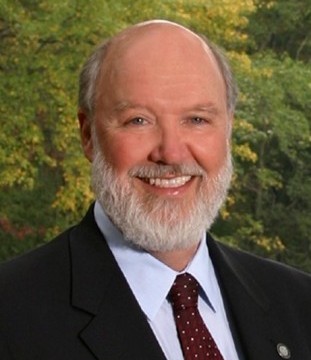
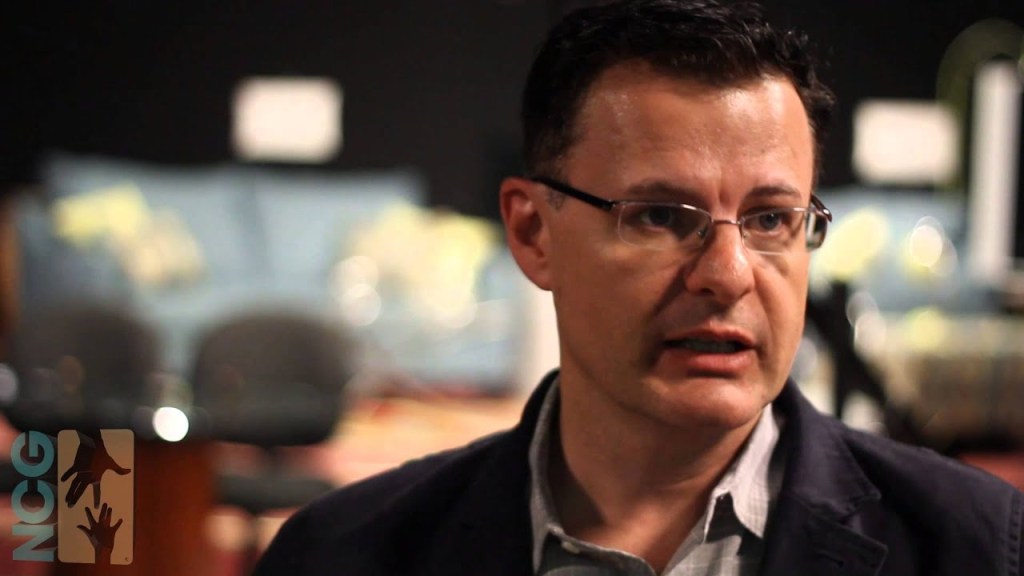
Technologies for Educating Brains, Without Reducing Smarts to Neurons
John Shook
Neuroscience and neurotechnology has the potential to improve views of cognitive functioning and learning processes, and help refine learning techniques contributing to educational attainment. Optimism about productive dialogue and collaboration between neurotech and education is highly recommendable. Some skepticism, if not cynicism, is also urged in the short term. Overhyped claims about potential “cognitive enhancers” through brain stimulation, in the wake of pharmacological “smart pills”, have arrived. It has already been popularly imagined that neurotech for improving mental abilities won’t necessitate any tough learning or formal education, or much conscious effort at all. Little about developmental psychology, cognitive science, or neurology supports this fantasy, but the fundamental problem is a collective forgetfulness that education itself is already a technology, among the oldest wielded by humanity. By keeping Hickman’s pragmatic philosophy of technology in mind, we can avoid reductionist fallacies about the psychology of learning, and cautiously evaluate how neurotech may best serve genuine education. Tools should improve persons, without making persons into tools.
Neuropragmatic Tools for Neurotechnological Culture
Tibor Solymosi, Westminster College
Neuropragmatism draws on Larry Hickman’s conception of technology and technoscience and his distinction between nature-as-nature and nature-as-culture. Just as the technical precedes the scientific, nature comes before the cultural — all the while science remains technical, culture natural — these parallel distinctions not only clarify limitations within cultural neuroscience or neuroanthropology (notably, the creeping Cartesian materialism) but also provide means for imagining future democratic vistas. This act of imagination is a further call for reconstructing our sense of ourselves in our world by expanding, and thereby enriching, the transaction between organism and environment such that the cybernetic and the neural are no longer restrained to the bodily but become embedded in our biocultural environments. Neuropragmatism provides a vision of neurotechnological culture, in both means and end, that is an ecologically novel future for how we construct our democratic niches. To achieve such a richly cybernetic culture, a vision must be sketched that is scientifically reasonable, in order to generate realistic hope that such a way of life is readily available from where we are now, given enthusiasms (warranted or not) about technology and fears (warranted or not) that democracy is on its way out.

Philosophical Tools for Educational Culture: Reconstructing Data and Assessment Practices
Mark Tschaepe, Prairie View A&M University
Assessment practices have come to dominate much of formalized education, especially within the United States. Currently, learning analytics (LA) and educational data mining (EDM) are purported by many educational companies and institutions to successfully improve learning through what are often considered as objective collection, classification, and analysis of educational data. Enthusiasm about big data in education has contributed to the naturalization of datafication within the field. Educational data is regarded as a natural resource that exists “out there” to be mined by EDM and refined by LA. Once refined, it is thought to bear the truth of educational assessment that leads to successful learning outcomes.
Here I use Larry Hickman’s work on pragmatism and technology to interrogate this trend in formal education. I begin with an explanation of the key concepts and practices used in my argument, including Hickman’s definition of technology, big data, datafication, naturalization, learning analytics, and educational data mining. Next, I provide a brief overview of the rhetoric of assessment within education. I then discuss how enthusiasm born from such rhetoric, especially for LA and EDM, has contributed to a form of reductionism within formalized education that denies that values are concealed and smuggled into assessment practices. By applying Hickman’s pragmatic philosophy of technology to educational assessment, I suggest ways in which LA and EDM may be useful for learning when values and their relation to data are consistently acknowledged and critically examined. I argue that this pragmatic approach provides a transactional framework that dismantles the naturalization of datafication and focuses instead on education as embodied experience that is critically reflective.
Beyond Popcorn Solutions: Hickman’s Anti-Reductionism and the Quest for Irrecusably Right Mechanisms in Valuation
Steven Fesmire, Radford University
Taking Peter Singer’s work as a test case, this presentation draws on Dewey and Hickman to critique the contemporary quest in ethics and policy for timeless mechanisms that purportedly get at objectively preexisting answers. Building on Dewey, Hickman’s pragmatic philosophy of technology challenges the aggregating moralist’s reductionistic quest for a predetermined metric whereby we judiciously weigh matters so that the balance automatically tips toward the good—many contemporary economists and policy analysts say “optimal”—outcome supported by a universal welfarist principle. Such strategies are at least a counterweight to a do-nothing attitude about the welfare of others, but the quest for a cover-all metric that is “Right” once and for all is not essential to constructing precise quantitative welfare models, algorithms, and assessments. So Hickman’s advice is to drain the theoretic bathwater while evaluating the functional-operational baby by its directive power.


The ‘Eclipse’ of Pragmatism:
Using Text-Analysis to Understand
the Recent History of American Philosophy
John Capps, Rochester Institute of Technology
he “eclipse” of pragmatism has been a consistent issue in the history of recent American philosophy. Broadly speaking, the view is that American pragmatism—-the philosophical approach historically associated with Peirce, James, and Dewey-—was overshadowed by other approaches during the mid-20th century. Typically, the view is that pragmatism was displaced by logical positivism or by analytic philosophy in general. Some are inclined to view this as an unfortunate turn of events: a native, homegrown philosophy crowded out by exotic invasive species. This, in turn, raises a number of thorny issues, including how to define both “pragmatic” and “analytic” philosophy, their relationship to each other, and how contemporary philosophers define, and identify with, their own tools, methods, and history. Here we will address this question from a new direction by using a data set of several thousand journal articles published in 10 prominent philosophy journals between 1900 and 2016. This will help us determine how, whether, and in what sense pragmatism was eclipsed. Besides shedding light on the recent history of American philosophy, this bibliometric method is itself a pragmatic approach to settling questions in the history of philosophy.
Chair
Matt Flamm, Radford University
TBA


The Measurement Problem in the Academy: Algorithms, Bibliometrics, and Successful Career
Eli Cramer
University of Wroclaw, Institute of Philosophy
In this presentation, we offer a Deweyan assessment of the problematic situation surrounding how to assess successful scholarly work toward career advancement. Bibliometric assessment of the reach of academic essays poses a new method of assessing academic work. Yet this system poses new problems, focusing on surface popularity of research, increasingly designed to pop-up in Google Scholar, Academia, and other algorithmic search engines. When careers are assessed on such popularity, content is largely overlooked and is replaced by reach, without questioning the value of such audiences and their responses to this work. We survey different global attempts to utilize such assessment schemes, from the Netherlands to China, and suggest potential ameliorative paths forward.
Hickman Was Right about Dewey: I’m Less Sure about Dewey
Carl Mitcham, Colorado School of Mines
Larry Hickman has made a substantial case for John Dewey as having a sophisticated, comprehensive philosophy of technology. After years of resisting Hickman’s claim, I became convinced that Dewey’s pragmatism in fact contains a strong epistemological, ethical, and political analysis of modern technology that offers an alternative to many of the interpretations of classic (Heidegger, Ellul) and later generation philosophers (Ihde, Borgmann, Feenberg) that can often incorporate many of their insights. And yet I remain troubled by the implications and prospects for a world conceived in such thorough going techno-pragmatist terms — troubled, as well, by my own difficulty in spelling these out. I will take this occasion to try to reflect on my doubts by drawing on the work of Daniel Kahneman and associated cognitive psychologists.


The Inclusive School and Digital Applications: An Open Question
Teodora Pezanno, University of Calabria
During the pandemic the problem of the contemporary school is to search for a new model of inclusive schooling linked to digital applications. This school model ought to be drawn from John Dewey’s Laboratory School in Chicago. Larry Hickman’s interpretation of John Dewey’s philosophy, based on the centrality of the concept of pragmatic technology, is fundamental for understanding the meaning of this inclusive school based on digital applications, in the philosophy of education.
The Teacher as Investigator: the Difficult Equilibrium between Technology and Education in the School
Giuseppe Spadafora, University of Calabria
Larry Hickman’s interpretation of John Dewey’s thought, based on the concept of pragmatic technology, has been revolutionary. Pragmatic technology should be considered a new way to understand the Aristotelian classification between Theory-Practice-Poiesis, and is fundamental for clarifying the meaning of technology for the construction of democracy in Dewey’s thought. In The Sources of a Science of Education of 1929 Dewey considers the teacher as an investigator, who applies the sciences of education to improve the student’s learning. This is a clear evidence of the application of the sciences of education to construct the democratic school.


The Productive Professor
Maura Striano, University of Naples
This essay will discuss if research activities can be seen as generating “products”, as well as what are the consequences of inspecting and evaluating them as such, instead of evaluating their contribution as ideas, thinking, research data, and materials for a collective process of inquiry.
Ethics in the Innovation Process: Some Unaddressed Issues
Paul Thompson, Michigan State University
There are dozens of proposals for integrating ethics into the early planning and assessment of technological innovation. Beginning with John Dewey in the United States and with figures such as György Lukács in Europe, the call continued with Hans Jonas and the rise of environmental justice and regulatory risk assessment. Schemes for integrating ethics into the innovation process were advanced under the banners of “constructive technology assessment,” “anticipatory governance,” “democratizing technology,” and “responsible innovation” among others. During the same era, the call for protecting the interests of human and animal subjects were framed as “research ethics” and research organizations created Institutional Review Boards to oversee scientific activity.
Larry Hickman’s work in the philosophy of technology contributes to these trends. Hickman first followed Langdon Winner’s critique of “straight line rationality” by demonstrating how Dewey’s approach offers much that has been unrealized in subsequent attempts to reform the innovation process. Later, Hickman demonstrates how pragmatist ethics and epistemology provide a positive program of action that complements the negative critique of Lukács and the Frankfurt School. While Hickman’s suggestions could be incorporated into virtually any of the new proposals for integrating ethics into technological research, development and dissemination, the sheer plethora of new approaches suggests that the field lacks the continuity to follow up on Hickman’s suggestions.
In this paper, I will explores some reasons why the field remains fragmented. First, I will acknowledge the significance of obvious explanations: the technical community’s unfamiliarity with ethical inquiry and the lack of both administrative and financial commitment to ethics-oriented research. However, I will argue that the broader public’s continued faith in discredited 19th century ideals of technical progress underwrites these obvious failures. As such, there is a continuous need for rudimentary reminders about the link between the entrepreneurial risks of innovation and the environmental, socio-economic and technical failures of the past. There is, in short, an epistemic gap between the message that innovators are prepared to hear and the sophisticated response that Hickman’s pragmatism offers. This gap may, in fact, be a practical limitation to philosophical pragmatism in many of its manifestations.
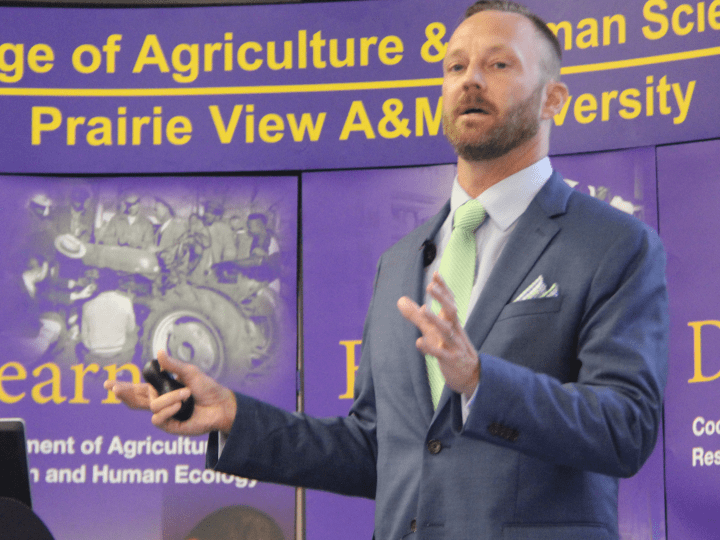
Philosophical Tools for Educational Culture: Reconstructing Data and Assessment Practices
Mark Tschaepe, Prairie View A&M University
Assessment practices have come to dominate much of formalized education, especially within the United States. Currently, learning analytics (LA) and educational data mining (EDM) are purported by many educational companies and institutions to successfully improve learning through what are often considered as objective collection, classification, and analysis of educational data. Enthusiasm about big data in education has contributed to the naturalization of datafication within the field. Educational data is regarded as a natural resource that exists “out there” to be mined by EDM and refined by LA. Once refined, it is thought to bear the truth of educational assessment that leads to successful learning outcomes.
Here I use Larry Hickman’s work on pragmatism and technology to interrogate this trend in formal education. I begin with an explanation of the key concepts and practices used in my argument, including Hickman’s definition of technology, big data, datafication, naturalization, learning analytics, and educational data mining. Next, I provide a brief overview of the rhetoric of assessment within education. I then discuss how enthusiasm born from such rhetoric, especially for LA and EDM, has contributed to a form of reductionism within formalized education that denies that values are concealed and smuggled into assessment practices. By applying Hickman’s pragmatic philosophy of technology to educational assessment, I suggest ways in which LA and EDM may be useful for learning when values and their relation to data are consistently acknowledged and critically examined. I argue that this pragmatic approach provides a transactional framework that dismantles the naturalization of datafication and focuses instead on education as embodied experience that is critically reflective.
The Measurement Problem in the Academy: Algorithms, Bibliometrics, and Successful Career
Leonard Waks, Hangzhou Normal University
In this presentation, we offer a Deweyan assessment of the problematic situation surrounding how to assess successful scholarly work toward career advancement. Bibliometric assessment of the reach of academic essays poses a new method of assessing academic work. Yet this system poses new problems, focusing on surface popularity of research, increasingly designed to pop-up in Google Scholar, Academia, and other algorithmic search engines. When careers are assessed on such popularity, content is largely overlooked and is replaced by reach, without questioning the value of such audiences and their responses to this work. We survey different global attempts to utilize such assessment schemes, from the Netherlands to China, and suggest potential ameliorative paths forward.

 Hickman Legacy Project